Web 3.0 Architecture
What is Tokenisation?
Converting real-world economic rights and asset values into programmable digital representations. By utilizing Distributed Ledger Technology (DLT), we sharply reduce legacy administrative overheads, eliminate delays in transaction settlement, and drive the financialisation and DePIN-ing of physical industries.
---
---
---
Mechanisms & Benefits
Liquidity Dilemma Resolution: Solves the typical enterprise exit friction. Traditional private equity stakes are notoriously hard to liquidate. This model opens secondary market spaces trading tokenised fractions with intermediate stable currencies for seamless entry and exit. Offers above-market yields for web3 native investors.
Risks & System Challenges
Compliance & Tracking: Presents structural challenges concerning local multi-jurisdiction corporate credit tracking, auditing standards, and digital legal traceability. Smaller businesses intrinsically carry higher defaults. Mitigating accurate on-chain account manipulation requires government-backed enforcement networks and strict external auditing safeguards.
Use Case 02 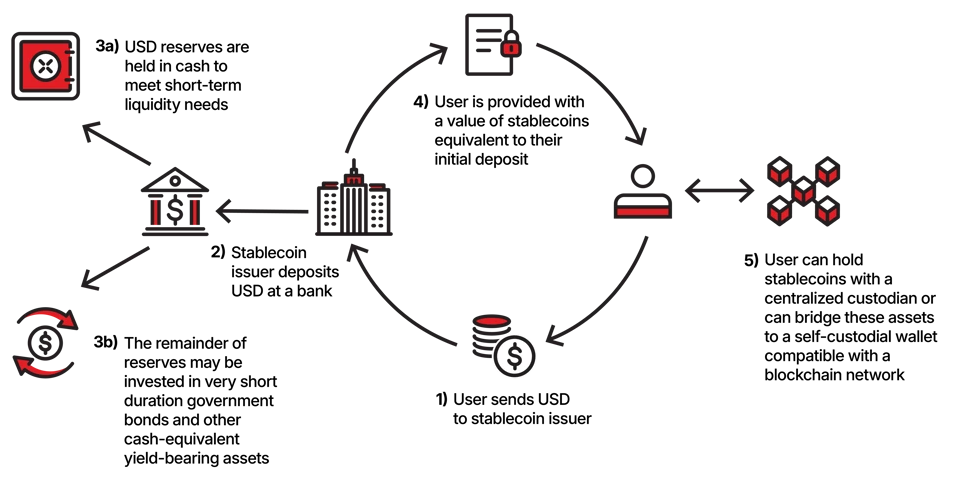
Stablecoin Issuance & Trading
Tokenising real-world assets (RWA) and commodities like fiat reserves or physical gold establishes highly dependable, decentralized value pegs. These asset backings generate reliable digital settlement layers across decentralized finance infrastructure.
Mechanisms & Benefits
Liquidity Pools: Bridges deep financial pools with in-demand preservation vectors that stand firm during macro market corrections. Regulated compliance frameworks let issuers balance asset reserves with yield-bearing instruments like short-duration US Treasuries without complex dividend payouts, maximizing secondary revenue generation models.
Risks & System Challenges
Supervisory Hurdles: Faces persistent technical friction regarding international custody supervision, audit verification speeds, and compliance tracking. Unclear regulatory changes or unverified treasury backing can destabilize liquidity pegs, triggering default and system contagion across interconnected protocols.
Use Case 03 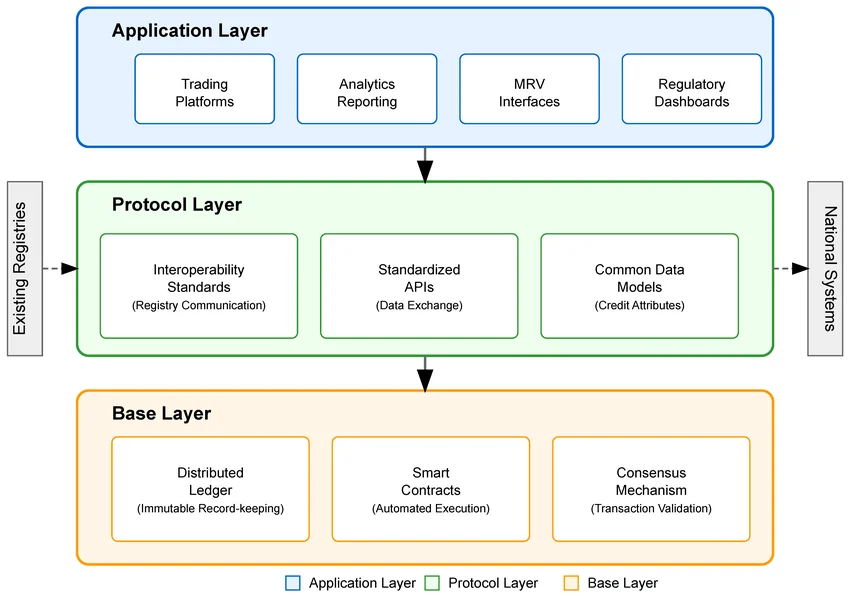
Carbon Credit Markets
Translating metrics like tonnes of carbon dioxide equivalent saved or removed tCOe directly into liquid on-chain value blocks. Tokenised accounting frameworks allow firms to efficiently neutralize environmental exposures under modern carbon tax regulations and Emissions Trading Schemes (ETS).
Mechanisms & Benefits
Ecosystem Synergies: Leverages growing national compliance mandates and green energy subsidy tracking. Melding smart contracts with clean energy projects (such as distributed photovoltaics and modular battery arrays) directly scales the issuing speed of verified offsets through automated DePIN logic.
Risks & System Challenges
Fragmentation Risks: Tracking offset metrics is difficult due to varying verification criteria across natural carbon sinks. Issuance suffers from localized market separation and shifting environmental policies. Standard fragmentation and varying registry rules delay global web3 adoption.